Price: ₹2,562.00 - ₹1,690.00
(as of Dec 04, 2025 19:04:54 UTC – Details)
The overwhelming majority of a software systemâ??s lifespan is spent in use, not in design or implementation. So, why does conventional wisdom insist that software engineers focus primarily on the design and development of large-scale computing systems?
In this collection of essays and articles, key members of Googleâ??s Site Reliability Team explain how and why their commitment to the entire lifecycle has enabled the company to successfully build, deploy, monitor, and maintain some of the largest software systems in the world. Youâ??ll learn the principles and practices that enable Google engineers to make systems more scalable, reliable, and efficientâ??lessons directly applicable to your organization.
This book is divided into four sections:
Introductionâ??Learn what site reliability engineering is and why it differs from conventional IT industry practicesPrinciplesâ??Examine the patterns, behaviors, and areas of concern that influence the work of a site reliability engineer (SRE)Practicesâ??Understand the theory and practice of an SREâ??s day-to-day work: building and operating large distributed computing systemsManagementâ??Explore Google’s best practices for training, communication, and meetings that your organization can use
From the Publisher
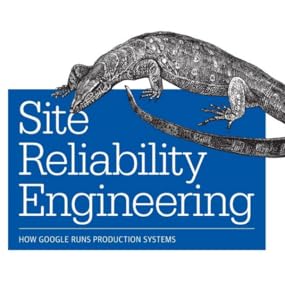
This book is divided into four sections: Introduction—Learn what site reliability engineering is and why it differs from conventional IT industry practices Principles—Examine the patterns, behaviors, and areas of concern that influence the work of a site reliability engineer (SRE) Practices—Understand the theory and practice of an SRE’s day-to-day work: building and operating large distributed computing systems Management—Explore Google’s best practices for training, communication, and meetings that your organization can use
How to Read This Book
This book is a series of essays written by members and alumni of Google’s Site Reliability Engineering organization. It’s much more like conference proceedings than it is like a standard book by an author or a small number of authors. Each chapter is intended to be read as a part of a coherent whole, but a good deal can be gained by reading on whatever subject particularly interests you. (If there are other articles that support or inform the text, we reference them so you can follow up accordingly.)
You don’t need to read in any particular order, though we’d suggest at least starting with Chapters 2 and 3, which describe Google’s production environment and outline how SRE approaches risk, respectively. (Risk is, in many ways, the key quality of our profession.) Reading cover-to-cover is, of course, also useful and possible; our chapters are grouped thematically, into Principles (Part II), Practices (Part III), and Management (Part IV). Each has a small introduction that highlights what the individual pieces are about, and references other articles published by Google SREs, covering specific topics in more detail. Additionally, there’s a companion website mentioned in the book that has a number of helpful resources.
We hope this will be at least as useful and interesting to you as putting it together was for us.
— The Editors


ASIN : B01DCPXKZ6
Publisher : O’Reilly Media; 1st edition (23 March 2016)
Language : English
File size : 12.0 MB
Simultaneous device usage : Unlimited
Enhanced typesetting : Enabled
X-Ray : Not Enabled
Word Wise : Enabled
Print length : 865 pages
Best Sellers Rank: #120,019 in Kindle Store (See Top 100 in Kindle Store) #86 in Software Design & Engineering eTextbooks #89 in Software Testing #207 in Networking & Communications eBooks
Customer Reviews: 4.6 4.6 out of 5 stars (1,172) var dpAcrHasRegisteredArcLinkClickAction; P.when(‘A’, ‘ready’).execute(function(A) { if (dpAcrHasRegisteredArcLinkClickAction !== true) { dpAcrHasRegisteredArcLinkClickAction = true; A.declarative( ‘acrLink-click-metrics’, ‘click’, { “allowLinkDefault”: true }, function (event) { if (window.ue) { ue.count(“acrLinkClickCount”, (ue.count(“acrLinkClickCount”) || 0) + 1); } } ); } }); P.when(‘A’, ‘cf’).execute(function(A) { A.declarative(‘acrStarsLink-click-metrics’, ‘click’, { “allowLinkDefault” : true }, function(event){ if(window.ue) { ue.count(“acrStarsLinkWithPopoverClickCount”, (ue.count(“acrStarsLinkWithPopoverClickCount”) || 0) + 1); } }); });